






 Transcription
 Captions (FCC/SDH)
 Transcript Editing & Proofreading
 Translation (text/audio/images)
 Subtitles
 Video Description (AD)


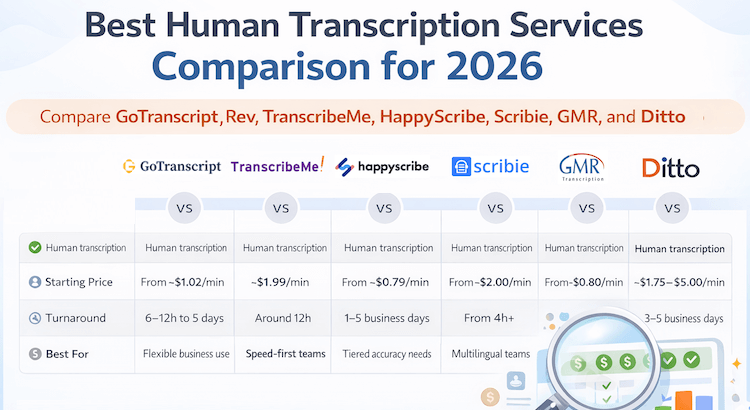
Human Transcription Services Compared 2026
(GoTranscript, GMR Transcription, Ditto Transcripts, Rev, TranscribeMe, HappyScribe, Scribie)
Automated transcription has improved significantly, but accuracy still drops as soon as audio becomes challenging. Overlapping speakers, accents, background noise, or domain-specific terminology can quickly reduce transcript quality.
That is why human transcription remains essential when transcripts must be reliable enough to publish, submit, caption, archive, or use in professional and legal workflows. This article compares seven well-known human transcription services, focusing on practical decision factors rather than marketing claims.
A quick way to narrow your choice
If you want to make a fast, reasonable decision, these general guidelines help:
-
You want flexible turnaround options and a straightforward ordering flow. GoTranscript offers multiple turnaround speeds ranging from same-day to several business days.
-
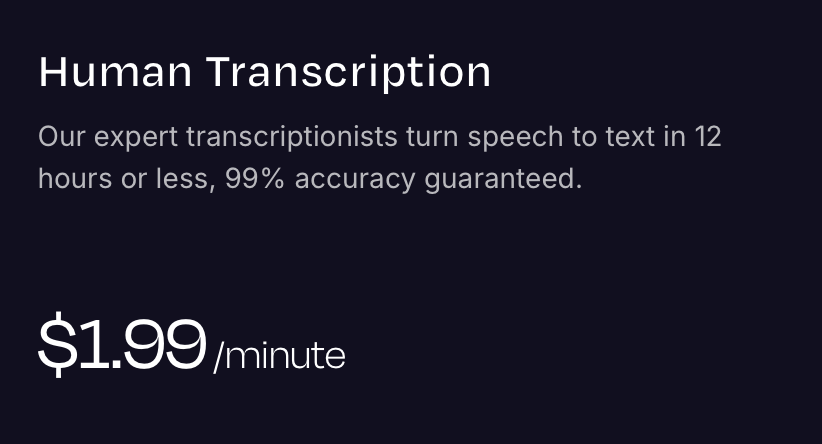
You want a flat, predictable rate with fast delivery. Rev positions itself around quick turnaround with a single per-minute price.
-
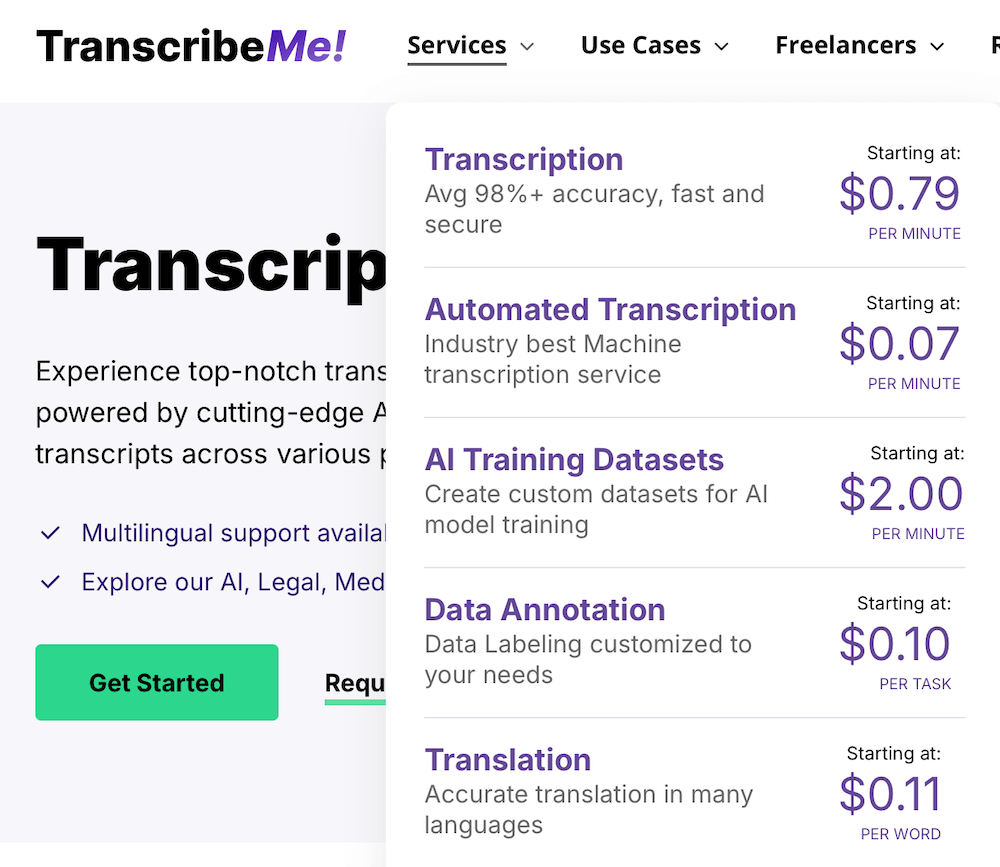
You are cost-sensitive but still want human involvement. TranscribeMe and Scribie offer lower-priced tiers or starting rates for human-reviewed transcripts.
-
You work across multiple languages and want one platform for AI and human workflows. HappyScribe focuses heavily on multilingual collaboration.
-
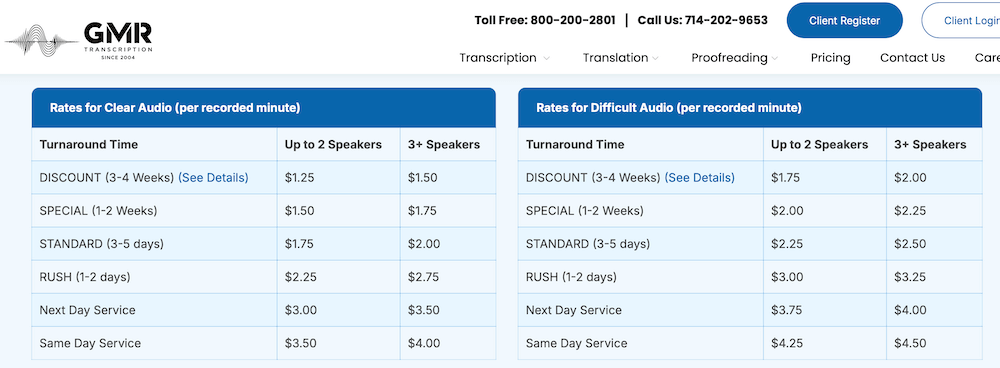
You want transparent pricing that accounts for audio difficulty and speaker count. GMR publishes tiered pricing tables.
-
You work in legal, law enforcement, or medical contexts with formal requirements. Ditto emphasizes category-based pricing and compliance-oriented workflows.
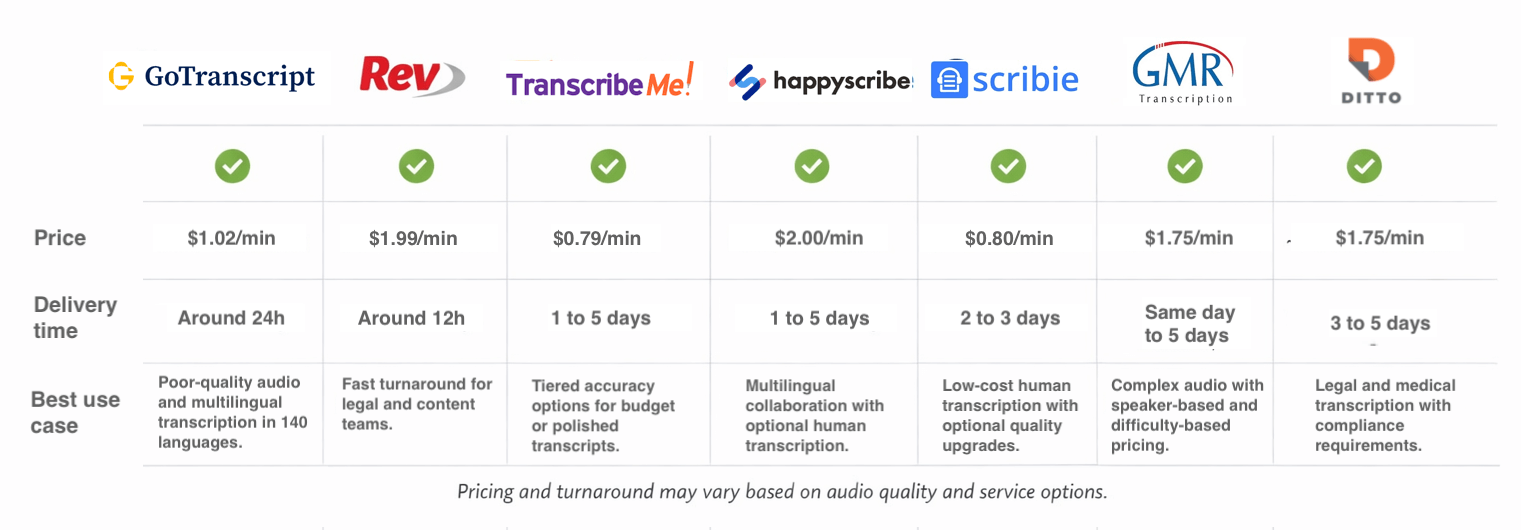
At-a-glance comparison (starting points)
These are published starting prices and stated turnaround ranges. Final cost often depends on audio quality, speaker count, formatting needs, and add-ons such as timestamps or verbatim style.
What “human transcription” actually means
Not all human transcription workflows are the same. In practice, providers usually follow one of these models:
-
Fully human transcription, where humans transcribe directly from the audio.
-
AI-first transcription with human editing, where an automated draft is corrected by humans.
-
Tiered or hybrid workflows, where accuracy levels vary based on speed and price.
None of these models is inherently wrong, but the right choice depends on how the transcript will be used. If accuracy, speaker attribution, and readability matter, a clearly defined human review process is essential.
The factors that usually matter most
Most disappointment comes from mismatched expectations rather than poor transcription. Before ordering, consider the following:
1. Turnaround expectations
Fast delivery is appealing, but turnaround times can change based on audio length, quality, and add-ons.
2. Audio difficulty definitions
Some providers price difficult audio separately, while others ask you to flag it during ordering. Background noise, accents, and cross-talk often trigger higher rates or longer delivery times.
3. Minimum order requirements
Certain services impose minimum project fees, which can significantly affect short recordings.
4. Add-ons and formatting
Verbatim style, timestamps, speaker labels, and subtitle formats often cost extra. Only select what you truly need.
5. Security and compliance
If transcripts contain sensitive, legal, or medical information, review each provider’s data handling and confidentiality practices carefully.
Service-by-service overview

Best for: Poor-quality audio and multilingual transcription in 140+ languages.
Not ideal for: Buyers who only need an instant AI draft.
1) Pricing
-
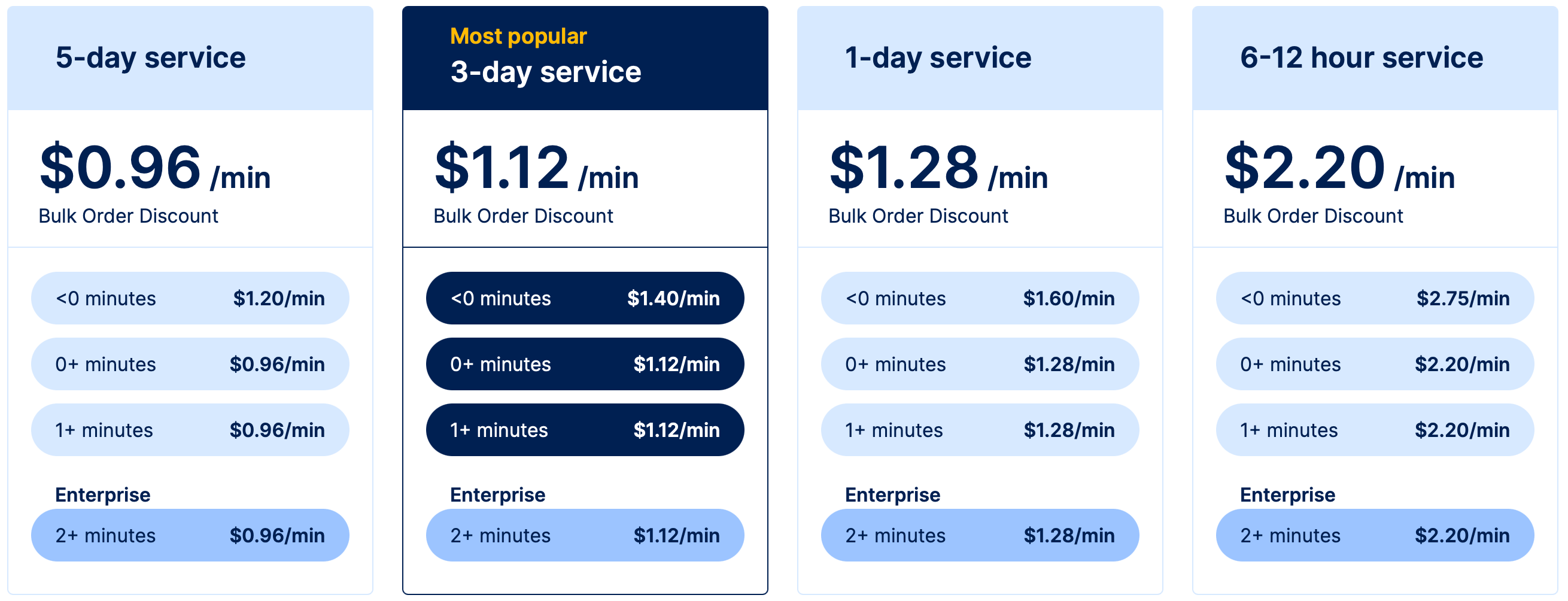
Human transcription pricing is tiered by turnaround. Published English rates are commonly shown around:
-
Your final quote can change with options like speaker count, timestamps, and difficult audio flags. If your recording has heavy accents or low-quality audio, expect an add-on option for “best outcome” style handling.
2) Security
-
GoTranscript operates a formal security program aligned with internationally recognized frameworks, including the ISO 27001 family standards and the NIST Cybersecurity Framework, which closely map to SOC 2 control principles used in enterprise vendor assessments. The platform implements strong technical and organizational safeguards such as encryption in transit, role-based access controls, multi-factor authentication, regular access reviews, and continuous monitoring. GoTranscript undergoes independent third-party security testing and maintains documented incident response, business continuity, and disaster recovery processes. For privacy-sensitive use cases, it offers a clear human-only processing policy, ensuring customer data is not used to train AI models. Its infrastructure runs on cloud providers that hold certifications such as SOC 2, ISO 27001, and related standards, reinforcing compliance for regulated industries.
-
If you are privacy-sensitive, look for “human-only” processing options and review the provider’s data handling and retention policies.
3) Additional services
-
Automated transcription and AI transcript proofreading (useful for quick drafts).
-
Captions and subtitles.
-
Translation and audio translation.
-
Video description (audio description).
-
API access for workflow automation (useful for teams with repeat volume).
4) Turnaround time
-
Multiple turnaround tiers, from same-day (6 to 12 hours) to several business days.
5) Covered languages
-
Human transcription in 140+ languages, plus translation and subtitle workflows for multilingual content.
6) Support
-
Help Center plus around-the-clock support positioning (useful for global teams and urgent projects).
-
Sales contact is typically available for enterprise or custom workflows.
7) Third-party reviews
-
Wirecutter (The New York Times’ product-review site) has publicly stated that GoTranscript was the best service in its testing for highly accurate transcripts, describing it as the top pick for accuracy.

Best for: Fast turnaround with simple, predictable pricing.
Not ideal for: Human transcription needs in languages other than English.
1) Pricing
-
AI transcription is typically listed at a lower per-minute rate than human.
-
Rev also markets plan-based pricing and team features, which can change effective cost if you order frequently.
2) Security
-
Rev publicly references enterprise-grade privacy options and compliance claims (commonly SOC 2 Type II and HIPAA in enterprise contexts). If compliance is critical, confirm which plan level applies and what documentation they can provide.
3) Additional services
-
Human transcription, captions, and subtitles.
-
AI transcription and meeting-focused features (helpful for teams that mix meetings and media production).
-
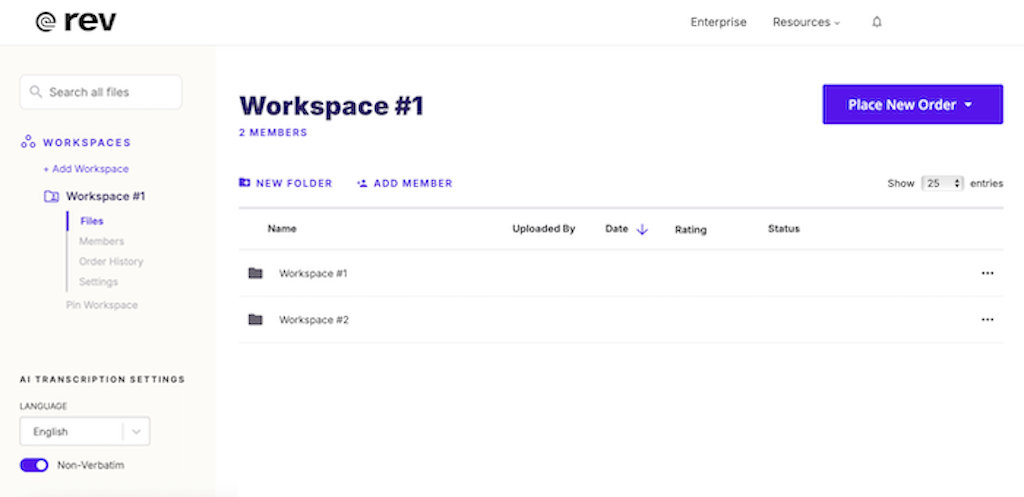
Editing workflow tools inside their platform.
4) Turnaround time
-
Human transcription is marketed with fast delivery expectations, typically around 12 hours or less for standard orders, with rush options in some cases.
5) Covered languages
-
Human transcription is positioned as English-only.
-
Subtitles and AI products can support broader language needs. If your project is multilingual, confirm whether you need human subtitle translation versus human transcription.
6) Support
-
Support is commonly offered via ticketing, plus chat and phone options depending on plan and region.
7) Third-party reviews
-
Check Trustpilot

Best for: Tiered accuracy options, including budget-friendly first drafts.
Not ideal for: Teams who want a single flat rate with no tiers.
1) Pricing
2) Security
-
TranscribeMe publicly describes strong security protocols (including encryption practices) and references compliance frameworks such as HIPAA-aligned workflows and privacy regulations.
-
For enterprise buyers, look for options like NDAs, background checks, and restricted teams (when offered).
3) Additional services
-
Translation services (language-dependent pricing).
-
Machine transcription options.
-
Data services such as datasets and annotation (useful for enterprises with language data needs).
-
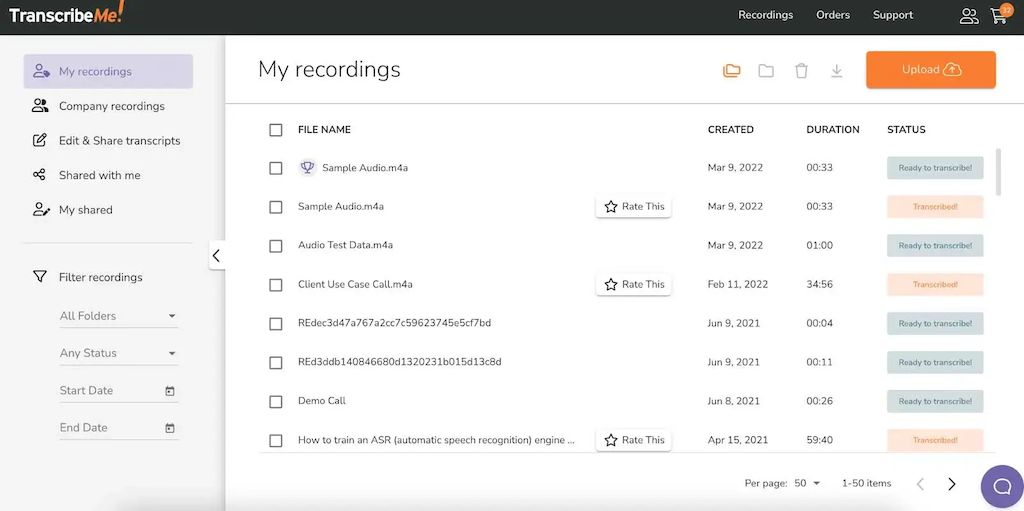
Multiple submission and workflow options (portal, API, and secure file transfer options in enterprise contexts).
4) Turnaround time
-
Turnaround varies by tier. First Draft is often positioned around next-business-day, while higher tiers can range across business days.
-
Rush options may exist for short, high-quality files.
5) Covered languages
-
TranscribeMe positions itself as multilingual, with a published list of supported languages. Pricing can vary by language, so confirm your target language before budgeting.
6) Support
-
Support is commonly handled through online requests and documentation, with custom quotes and enterprise onboarding available.
7) Third-party reviews
-
Check Trustpilot

Best for: Multilingual teams that want a platform plus optional human services.
Not ideal for: Buyers who only want a standalone human transcription vendor.
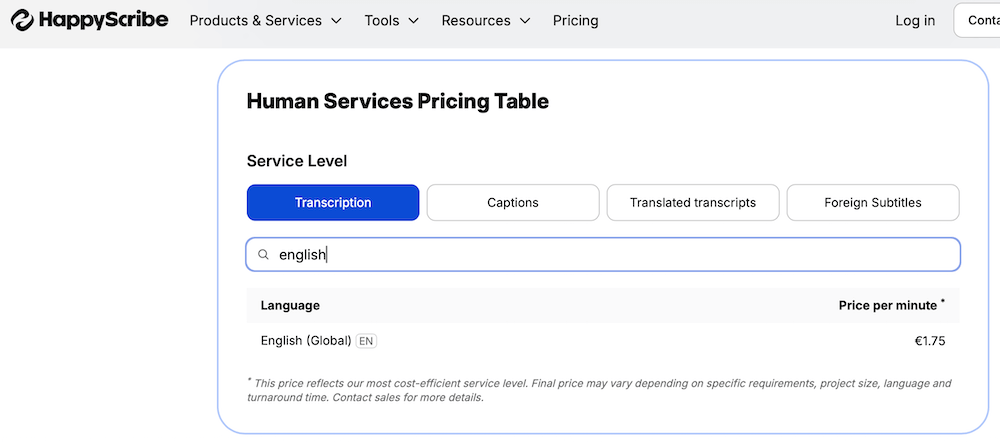
1) Pricing
2) Security
-
HappyScribe publicly references SOC 2 Type 2 and GDPR compliance.
-
It also describes standard SaaS security controls such as role-based access and confidentiality commitments.
3) Additional services
-
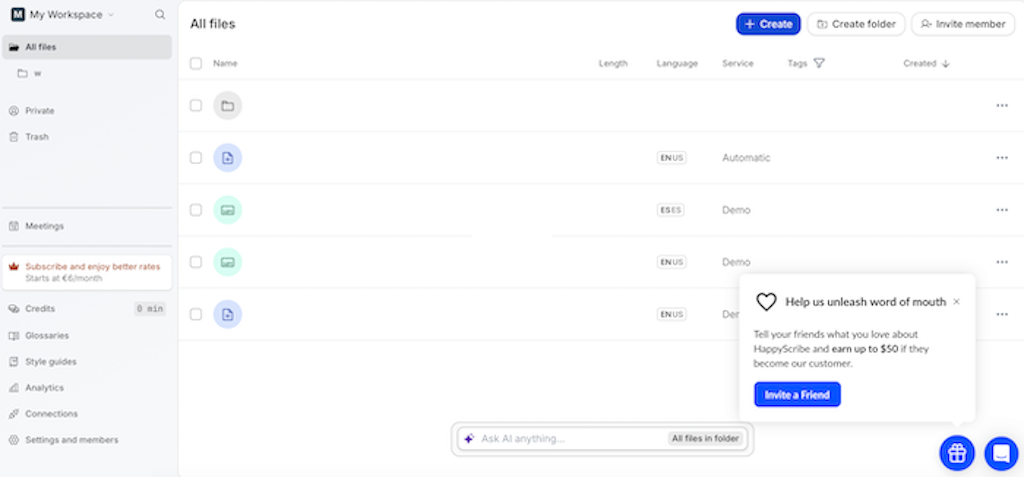
AI transcription, subtitling, and translation inside a collaborative platform.
-
Human-made transcription and subtitles as premium services.
-
Editing and team collaboration features, which can matter as much as raw accuracy for content teams.
4) Turnaround time
-
Human turnaround varies by language and workload. Some languages may have faster delivery than others, and the platform often shows expected delivery during ordering.
5) Covered languages
-
Broad multilingual coverage, with human service pricing listed by language.
-
If you are producing multilingual subtitles, confirm both subtitle language availability and turnaround expectations per language.
6) Support
-
Help Center plus email-based support is typical for SaaS platforms in this category.
7) Third-party reviews
-
Check Trustpilot
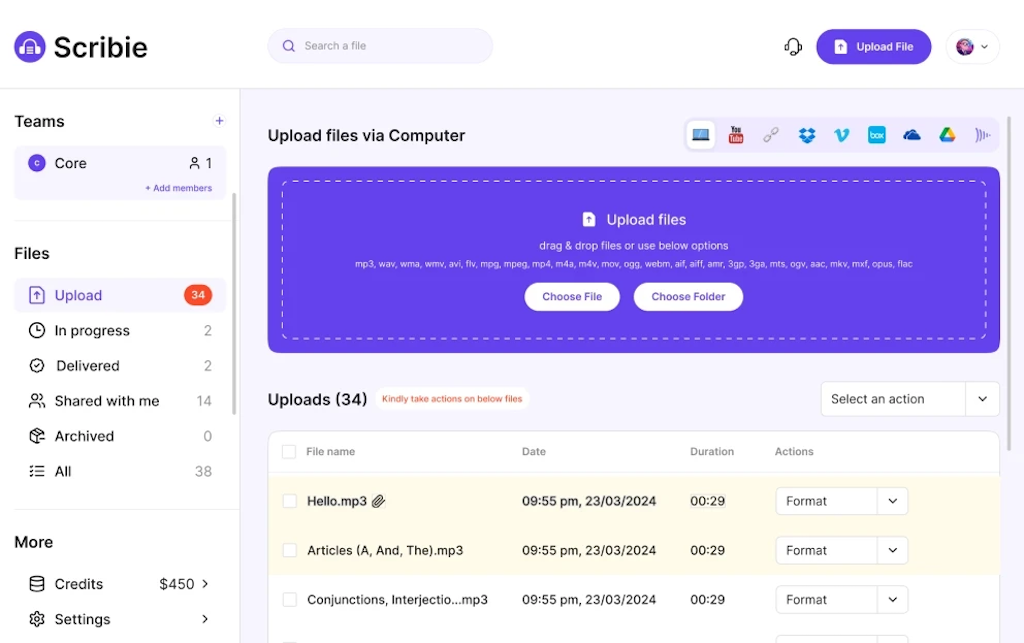
Best for: Low starting price with clear paid upgrades for harder audio.
Not ideal for: Multilingual human transcription projects.
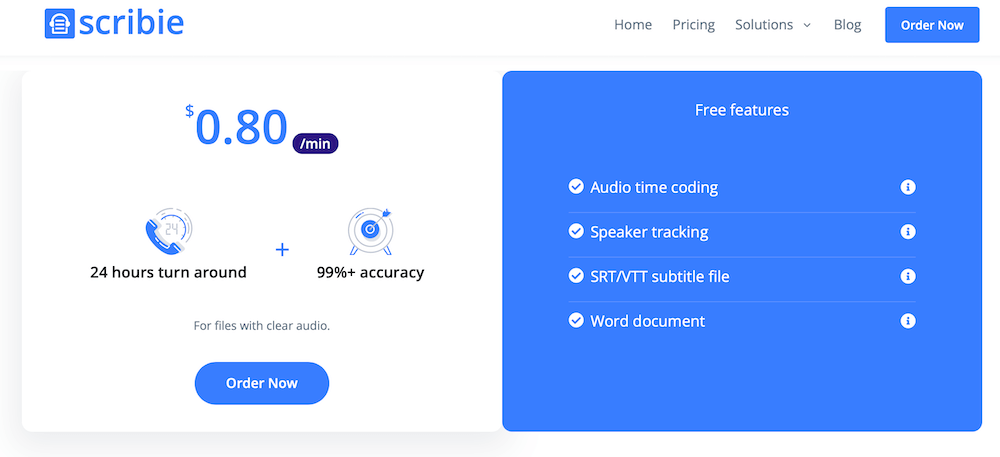
1) Pricing
2) Security
-
Scribie publicly positions itself around confidentiality and references SOC 2 Type 2.
3) Additional services
-
Online editing tools.
-
Business and enterprise offerings depending on volume and workflow needs.
-
Use-case positioning for legal-style outputs (confirm any special formatting requirements before ordering).
4) Turnaround time
-
Scribie commonly positions standard delivery around 24 hours, with faster options through paid priority processing.
5) Covered languages
-
Scribie is primarily positioned for English audio transcription. Confirm if you need anything beyond English.
6) Support
-
Support options commonly include chat and email, with phone options for certain inquiries.
7) Third-party reviews
-
Check Trustpilot.
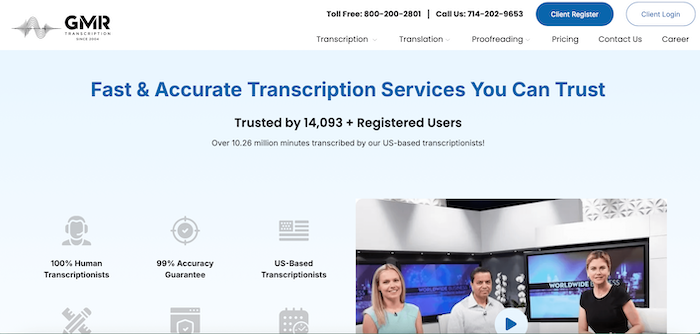
Best for: Clear pricing tables that reflect difficulty, speakers, and urgency.
Not ideal for: Buyers who want a single simple flat rate.
1) Pricing
3) Security
-
GMR describes secure file handling practices and confidentiality agreements for transcriptionists.
-
If your project is sensitive, confirm retention and deletion policies and whether they offer NDAs for clients.
3) Additional services
-
Video transcription and related transcription formats.
-
Options like verbatim and timestamps as paid extras.
-
Translation offerings and workflow tools (including API or app-based submission in some contexts).
4) Turnaround time
-
Very wide range, from multi-week discount options to next-day and same-day, depending on file conditions and order constraints.
5) Covered languages
-
Transcription is positioned primarily around English, with published Spanish-to-Spanish transcription options.
-
Translation is marketed more broadly. If your need is multilingual human transcription (not translation), confirm availability.
6) Support
-
Phone and web-based contact are commonly available, which helps if you need fast quoting or rush coordination.
7) Third-party reviews
-
Check Trustpilot.
Best for: Legal, law enforcement, and medical-style workflows with compliance language.
Not ideal for: One-off short recordings if a project minimum applies.
1) Pricing
2) Security
-
Ditto publicly positions itself as HIPAA- and CJIS-compliant in relevant contexts.
-
If you have regulated requirements, confirm how data is stored, who can access it, and whether they can sign required agreements for your organization.
3) Additional services
-
Legal transcription workflows and related add-ons common in legal environments.
-
Options for higher-confidentiality handling in some scenarios (for example onsite workflows). Confirm availability by location and project size.
4) Turnaround time
-
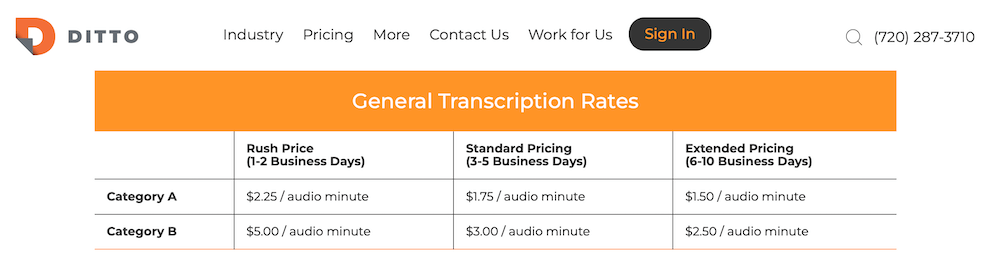
Turnaround is typically defined in business days, often with:
-
Rush (around 1 to 2 business days)
-
Standard (around 3 to 5 business days)
-
Extended (around 6 to 10 business days)
Same-day requests may require phone coordination.
-
5) Covered languages
-
Ditto’s public pricing is organized around workflow complexity rather than a broad language catalog. If your work is multilingual, confirm language support early.
6) Support
-
Direct support is part of Ditto’s positioning, including phone contact for urgent needs.
7) Third-party reviews
-
Ditto is often reviewed on platforms like Yelp (especially for local services) and may have fewer total reviews than larger platforms.
How to choose a transcription service (checklist)
Use this checklist to evaluate and compare transcription services before placing an order:
-
Define the use case
Is the transcript for publication, legal review, research, accessibility, or internal reference only? -
Choose human vs AI appropriately
For poor-quality audio, multiple speakers, accents, or compliance needs, prioritize human transcription or human-reviewed services. -
Check how difficult audio is handled
Look for clear policies on background noise, accents, cross-talk, and speaker count, including any required add-ons. -
Review total pricing, not just the headline rate
Confirm minimum order fees, rush pricing, verbatim and timestamp costs, and whether pricing changes based on audio quality. -
Verify turnaround expectations
Make sure the stated delivery time matches your real deadline and understand what can delay it. -
Confirm language coverage
Ensure the service supports all required languages for human transcription, not only AI or subtitle translation. -
Assess security and compliance
Check alignment with standards like SOC 2, ISO, HIPAA, or GDPR if your content is sensitive. -
Understand what you will receive
Verify file formats, speaker labeling, timestamp options, and whether revisions are included. -
Evaluate support quality
Look for available support channels, response times, and enterprise assistance if needed. -
Read third-party reviews carefully
Focus on recurring themes across reviews rather than individual complaints. -
Start with a test file
Upload a small sample to validate accuracy, formatting, and turnaround before scaling.
This checklist helps ensure you choose a transcription service that fits both your workflow and quality expectations.










